You send the monthly report. The client opens it, scrolls past the charts and replies with one line: so is it working? If that keeps happening, the report is doing the wrong job. A good SEO report for clients answers that question before the client has to ask it.
This guide gives agencies in the UAE a one-page structure that a non-technical client can read in about two minutes. It is built around positions, movement and next actions. You also get a way to walk the client through the report, a short script for explaining a drop, and a simple way to decide how often to send it.
What is a client SEO report for?
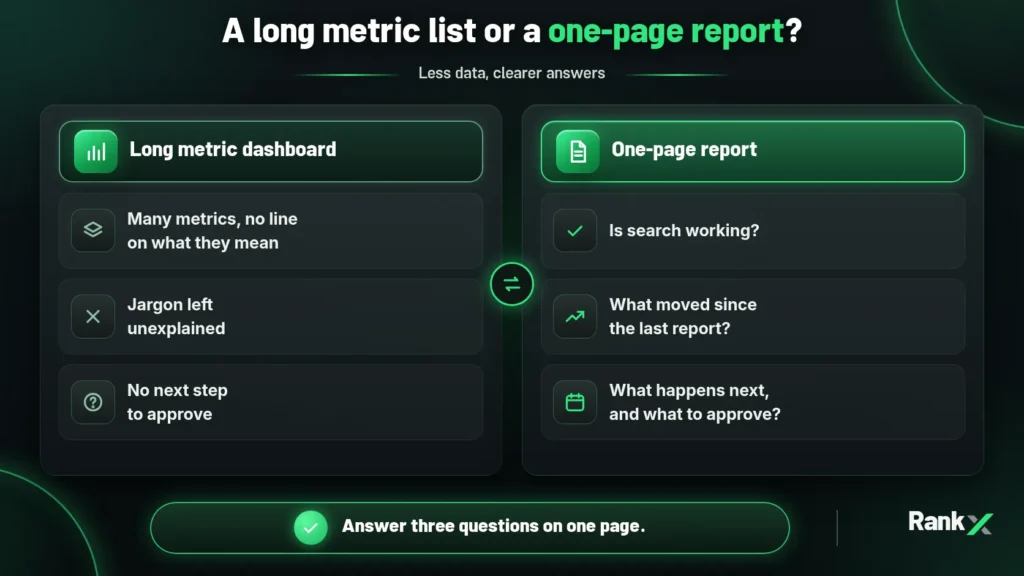
A client SEO report has one job. It tells someone who does not work in SEO three things: whether search is working, what moved since the last report, and what happens next. Everything else is supporting detail, and most of it can stay out of the main page.
The ending matters as much as the opening. Close every report with short recommendations: what to fix, what to improve and what to do next. A report that stops at the numbers leaves the client to work out the next step alone.
Most guides on this topic are long lists of metrics written for people who already use SEO tools. They help when you build a full dashboard. This article is the short version, for clients who have never opened an SEO tool and just want a clear answer.
What one-page structure will your client actually read?
Explain three terms the first time they appear, in plain words. The SERP is the page of Google results. A position is where a page appears on that list, counted from the top. Organic results are the unpaid listings, not the ads. With those three words explained, the client can follow the rest of the page.
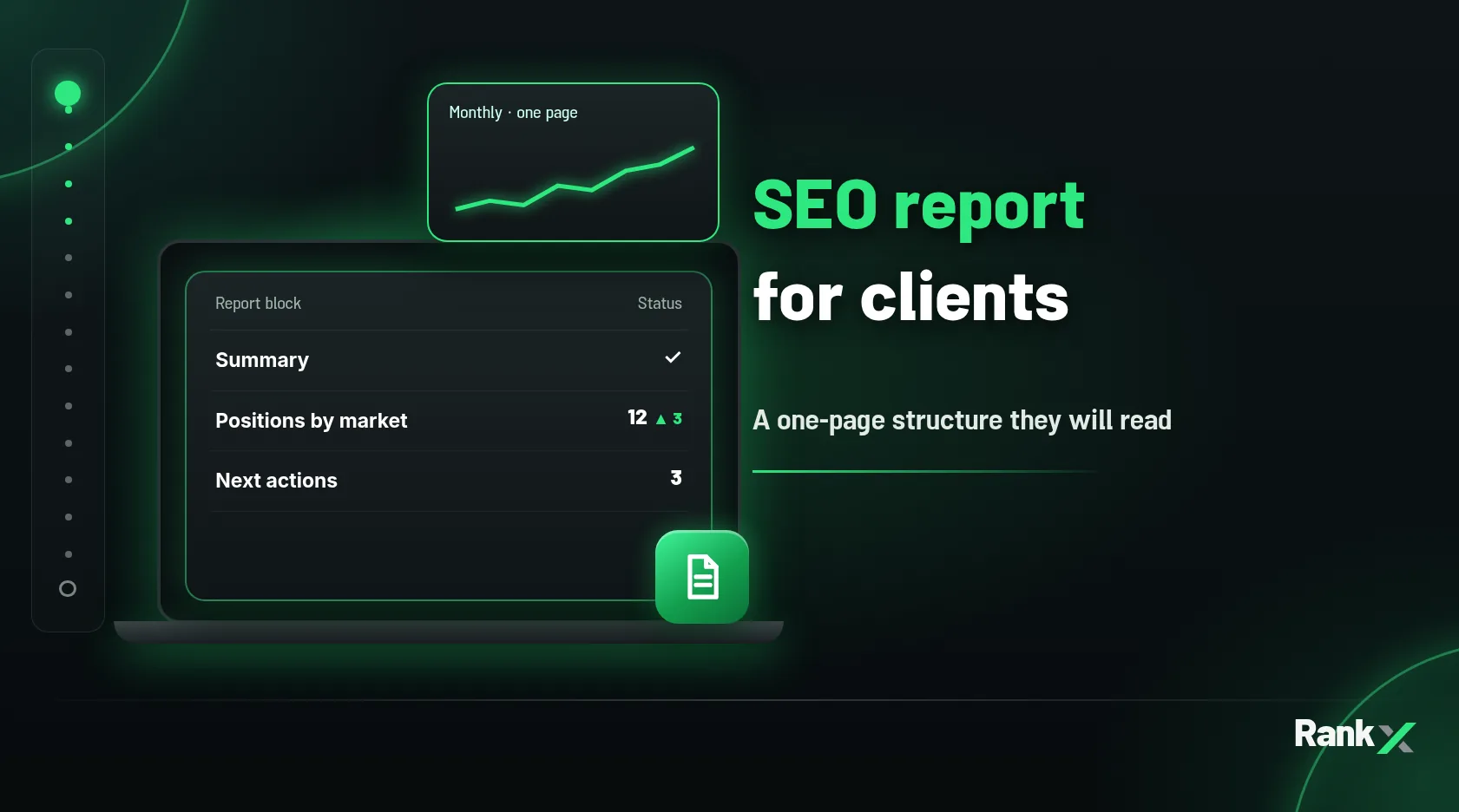
Then build the page from four blocks, always in the same order:
- Summary line. One or two sentences that say whether search is working, what moved and what comes next.
- Positions. Where the client’s pages rank for the keywords you agreed to track, grouped by service and market. If your tool gives one visibility score for the whole site, put it at the top of this block.
- Movement. Which keywords went up, went down, appeared for the first time (new) or dropped out of the results you track (lost).
- Next actions. A short list of what you will fix, improve or do next, and what the client needs to approve.
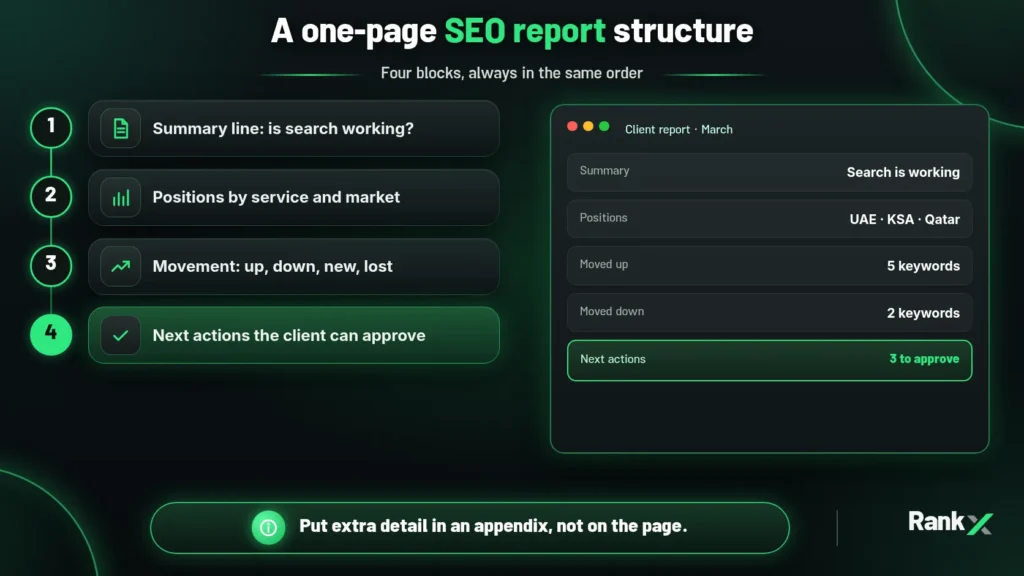
Answer three questions on one page. A single page that answers whether search is working, what moved and what comes next is easier for a busy owner to read than a long metric dashboard. If a client wants more detail, add it as an appendix after the page, not inside it.
How do you show positions and movement without jargon?
Group keywords the way the client thinks about the business: first by product or service, then by market. A Dubai agency with clients in Riyadh and Doha should check each Google market separately (see how to check Google ranking for your website). A keyword can rank well in one country and not show at all in another, and a single blended figure hides that.
Keep Arabic and English keywords in separate groups as well. The Arabic and English result pages for the same service often show different sites, so mixing them in one list can make a strong group look weak, or the other way round. Arabic spellings can split results too (see our guide to Arabic keyword rank tracking). An Abu Dhabi retailer selling across the GCC may see this clearly once the two languages sit apart.
Show movement in words with an up or down label, not as a raw table of every keyword. Next to each large move, add one short reason. The client reads the label, reads the reason and moves on. A labelled movement block can look like this:
| Label | When you use it | Example note for the client |
|---|---|---|
| Up | The keyword ranks higher than in the last report | Moved up after we rewrote the service page |
| Down | The keyword ranks lower than in the last report | Moved down; we are checking which page now ranks above yours |
| New | The keyword appears in the tracked results for the first time | Your page now shows for this search in Doha |
| Lost | The keyword no longer appears in the tracked results | No longer showing; we are checking whether the page changed |
How do you write next actions the client can approve?
Next actions are the part clients act on, so keep each one short and able to stand on its own. Every action should:
- Name the page or keyword the action affects
- Say in one line what will change
- Say what the client must do, supply or approve
- Say when you will report back on it
Keep the list short. A client can usually say yes or no to a handful of clear actions on a call, while a long list tends to get postponed. A good action reads like this: rewrite the Arabic service page for the Riyadh market; we need your updated service list by the next call.
How do you walk a client through the report?
A short review call works better when it follows the page. Use the same order every time:
- Read the summary line aloud and check that the client agrees with it
- Go through the biggest moves, up and down, with their one-line reasons
- Close with the actions and get a yes or no on each
Say plainly what a ranking report cannot show. Positions do not tell you about sales, calls or enquiries. That data lives in the client’s own sales records, call logs or website analytics. Saying this early stops the client from reading a single position change as a change in revenue.
What should you say when positions drop?
State the drop first, before anything else. Then say what you are checking, and then what you will do next. For example: “Your main service keyword in Doha moved down this month. We are checking which pages now rank above yours and whether anything changed on your page. We will update you on the next call with what we found and a fix.” Clients may accept a drop more easily when they hear it from you first, with a plan attached.
How often should you send the report?
There is no single right rhythm, but a common split works well: monthly reports for most retainers, weekly reports for fast-moving projects, and a live link for clients who want to look between scheduled updates.
| Cadence | Fits | Keep in mind |
|---|---|---|
| Monthly | Most retainers | Usually enough time for movement to show |
| Weekly | Fast-moving projects, such as a site launch | Keep it to the summary and the biggest moves |
| Live dashboard | Clients who want access between scheduled updates | Still send the written summary and actions |
Separate tracking from reporting. You can check positions every day and still send one written report a month. Daily checks let you spot a drop early; the monthly report explains it. A rank tracker such as RankX checks rankings every morning, shows which keywords moved up or down, and lets you give clients a read-only share link or a PDF report. You can add notes on the trend line, such as “service page rewritten”, so the client sees why a line moved, and send the report in English, Arabic or Persian.
Which mistakes make clients stop reading?
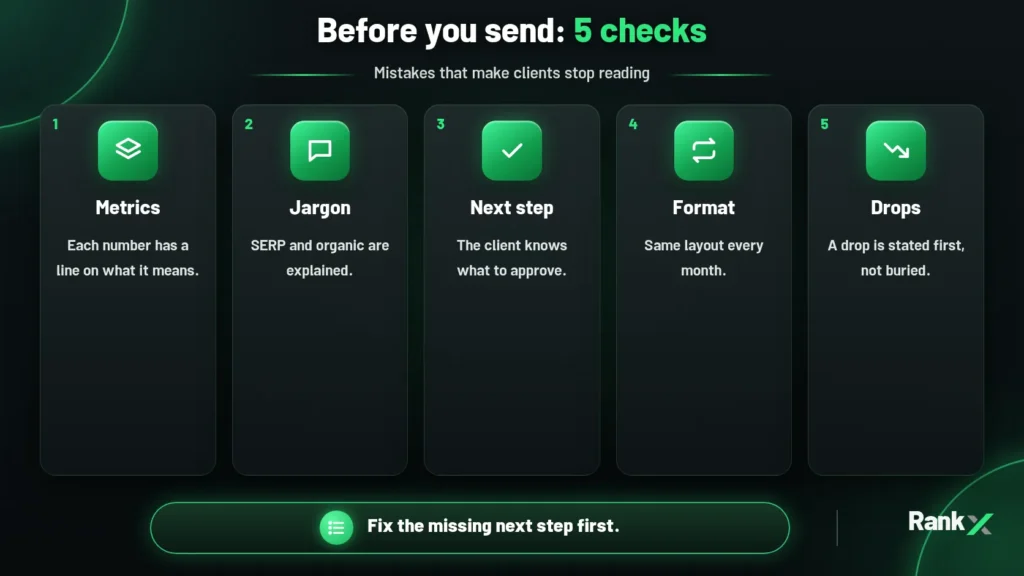
- Too many metrics, with no line saying what each one means for the business
- Jargon such as SERP or organic left unexplained
- No next step, so the client does not know what to approve
- A new format every month, so the client cannot compare
- A drop buried at the bottom instead of stated first
The missing next step is the one to fix first. A report that ends without next actions leaves the client asking what to do. Before you send, run through this checklist:
What should you do next?
Take your next client report and rebuild it on one page: summary line, positions by service, market and language, movement with labels and reasons, and a short list of actions. Agree the cadence with the client, keep the format fixed, and walk them through it in the same order each time. If a client asks why Search Console shows a different number from your report, our guide to Search Console vs rank tracker explains the gap.
Frequently asked questions
What should an SEO report for clients include?
A one-line summary, keyword positions grouped by service and market, the movement since the last report (up, down, new, lost) and a short list of next actions. The next actions work well as short notes on what to fix, what to improve and what to do next.
How often should I send an SEO report to a client?
Monthly reports work for most retainers, weekly reports fit fast-moving projects, and a live link helps clients who want access between scheduled updates. You can still track positions daily and report monthly.
How do I tell a client their Google rankings dropped?
Say it first, then say what you are checking and what you will do next. Give a clear time to report back, such as the next review call.
Should Arabic and English keywords be in the same report?
They can be in the same report, but keep them in separate groups. Arabic and English result pages often differ, so mixing them can blur what is actually moving.